AI Chatbots & Assistants
Assistants that answer from your own documentation and data, with clear limits so they say "I don't know" instead of inventing answers.
Practical AI built into your product or workflow — chatbots, document processing and automation that save real hours, not demos that impress once and get switched off.
Adding AI to a product is easy. Adding it somewhere that saves money or time is the harder part. I start by finding the task in your business that is repetitive, text-heavy and currently done by a person — that's usually where an AI feature pays for itself.
From there it's ordinary engineering: a well-scoped prompt, your own data as context, guardrails so it fails safely, and a way to measure whether it's helping. The AI is a component inside a normal application, not the whole architecture.
If the AI feature belongs inside a larger internal system, it usually comes packaged with custom software development so the model has real data to work with.
Assistants that answer from your own documentation and data, with clear limits so they say "I don't know" instead of inventing answers.
Language models wired into your existing product — summaries, drafting, classification and extraction where they fit the workflow.
Pulling structured data out of invoices, forms, contracts and reports, with a review step for anything the model isn't confident about.
Search that understands meaning rather than keywords, over your own content — built on embeddings and a vector store.
Multi-step processes automated end to end, with AI handling the judgement calls and code handling everything that must be exact.
The interface around the model — streaming responses, history, editing and the states that make an AI feature feel reliable.
Six stages, each with something you can see and sign off.
We look at where your time actually goes and pick one task where AI has a clear, measurable payoff — not a list of possibilities.
I define the data the model needs, the guardrails it needs, and how we'll tell whether it's working before building anything.
The interface around the AI is designed first: how results are shown, corrected and approved by a human where that matters.
Built as a normal application with the model as one component — prompts versioned, outputs validated, costs tracked.
Tested against real examples from your business, including the awkward ones, with accuracy checked rather than assumed.
Deployed with monitoring on usage and cost, plus documentation so your team knows what it can and can't be trusted with.
One software engineer, not an agency layer. Direct communication, one person accountable, no budget spent on account managers.
If a rules-based script would solve your problem more reliably and cheaper, I'll say so rather than sell you a model.
Retrieval over your own documents and records, so answers come from your business rather than the model's imagination.
Token usage tracked and budgeted from day one, so an AI feature doesn't quietly become your largest monthly bill.
Anything consequential gets an approval step. Automation should remove the typing, not the judgement.
Model providers change fast. The integration is abstracted so switching models later is a change, not a rewrite.
I've built AI features inside production apps, including a chatbot in a college management system now in daily use.
Real projects where ai solutions was part of the build. Each one has a full case study.
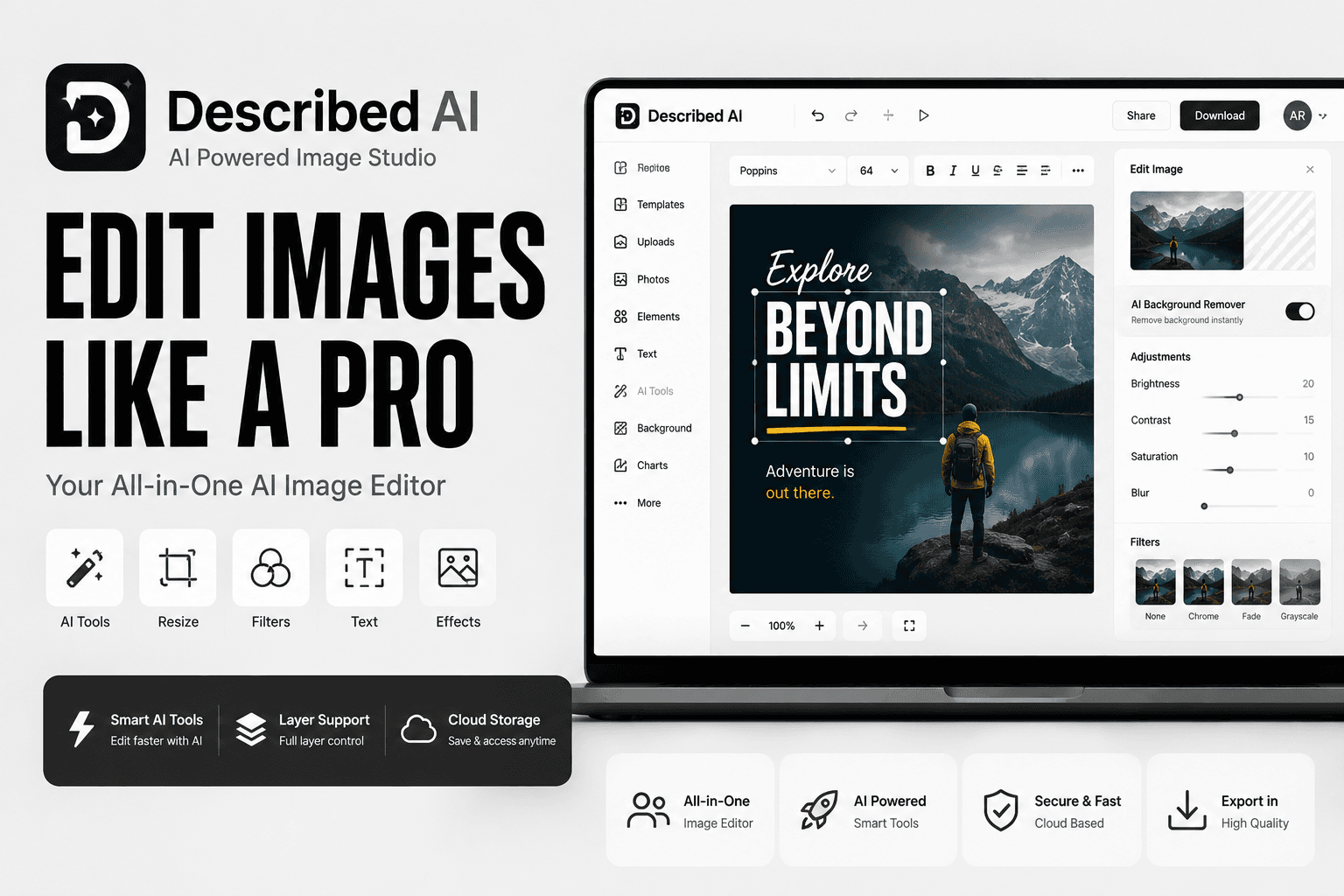
A Canva-style design tool powered by AI, with separate dashboards for each type of user.
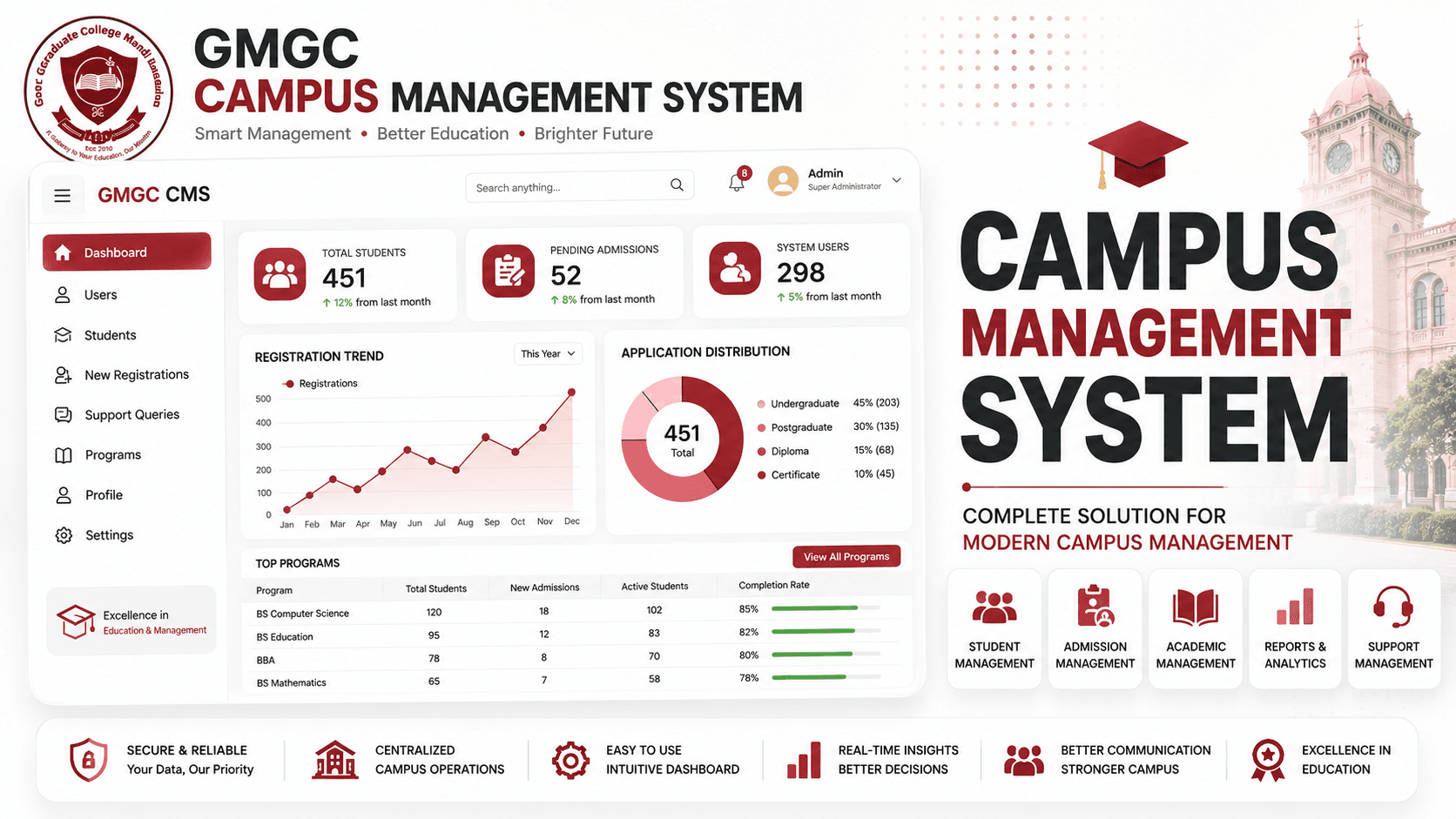
A full management platform running in production at Government Municipal Graduate College, Faisalabad — with real staff and real student data.
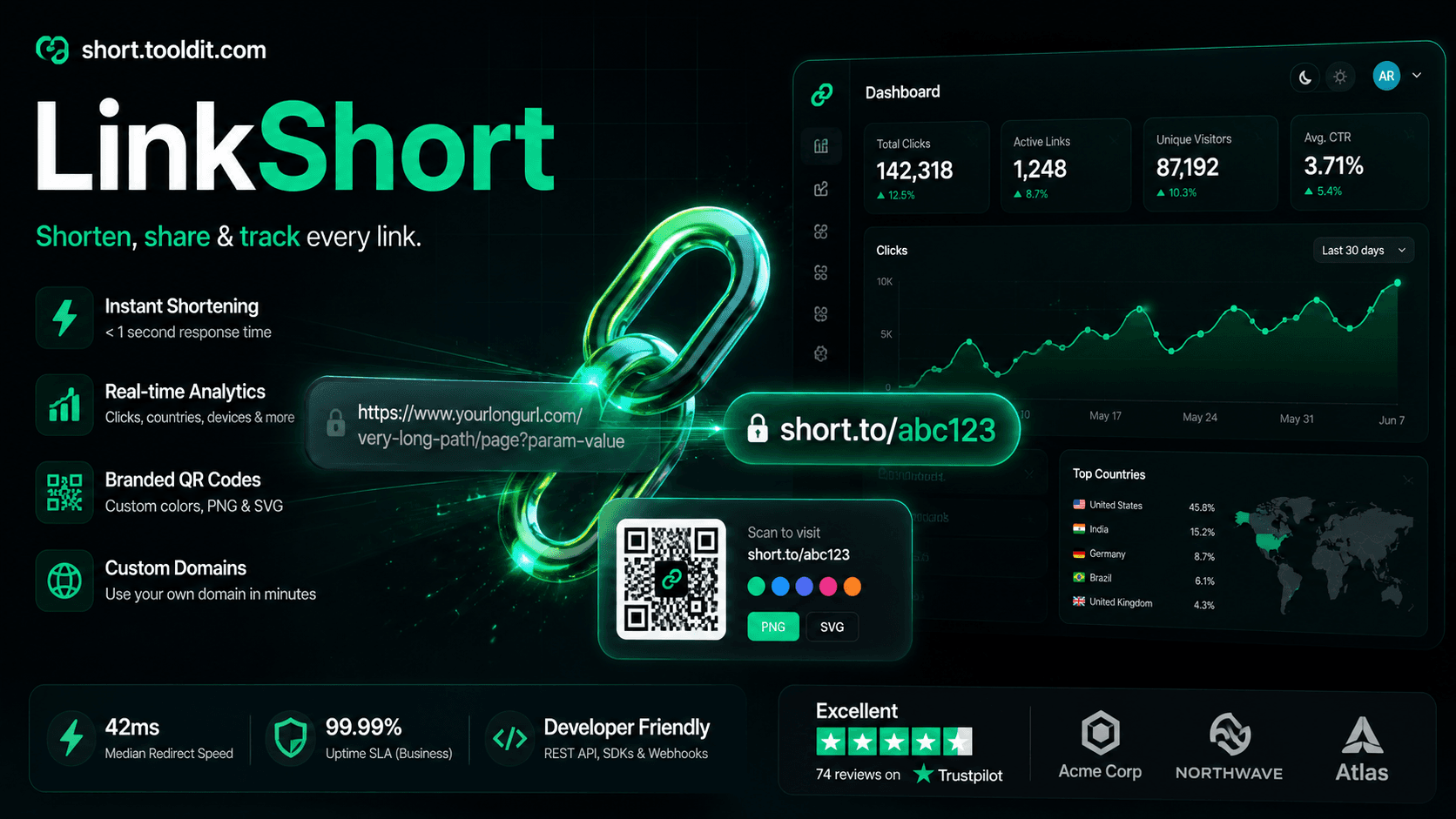
A link-management product for businesses: short branded links on your own domain, click tracking, and monthly subscriptions.
The things clients ask most before starting a ai solutions project. Anything not covered here, just ask.
Any language model can. The way to reduce it is to ground answers in your own documents, validate outputs in code, and design the interface so the assistant can say it doesn't know. I build all three in, and I'll be direct about what level of accuracy is realistic for your use case.
No. Your data is used as context for answering, not for training, and the providers I use offer API terms that exclude training on your inputs. Anything sensitive can be filtered or kept on your own infrastructure.
It depends on volume and which model the task needs. Part of the planning stage is estimating cost per use and per month, and I build in usage tracking so you can see it rather than guess.
Yes — that's most of this work. I integrate with your current stack rather than asking you to rebuild around the AI feature.
Then I'll tell you in the first call. Plenty of problems that sound like AI problems are better solved with a database query, a form or an integration, and those are cheaper and more reliable.
Mainly the Claude and OpenAI APIs, chosen per task based on quality, latency and cost. The integration is built so the model can be swapped without rewriting the product.
Tell me about the task that eats your week. I'll tell you honestly whether AI is the right tool — and if it is, what it would take to build.